
Why Space Exploration Matters for India's Youth
From Chandrayaan to Gaganyaan and the Bharatiya Antariksh Station, why Kashyap Jani wants Gujarat's students inspired by India's space programme.
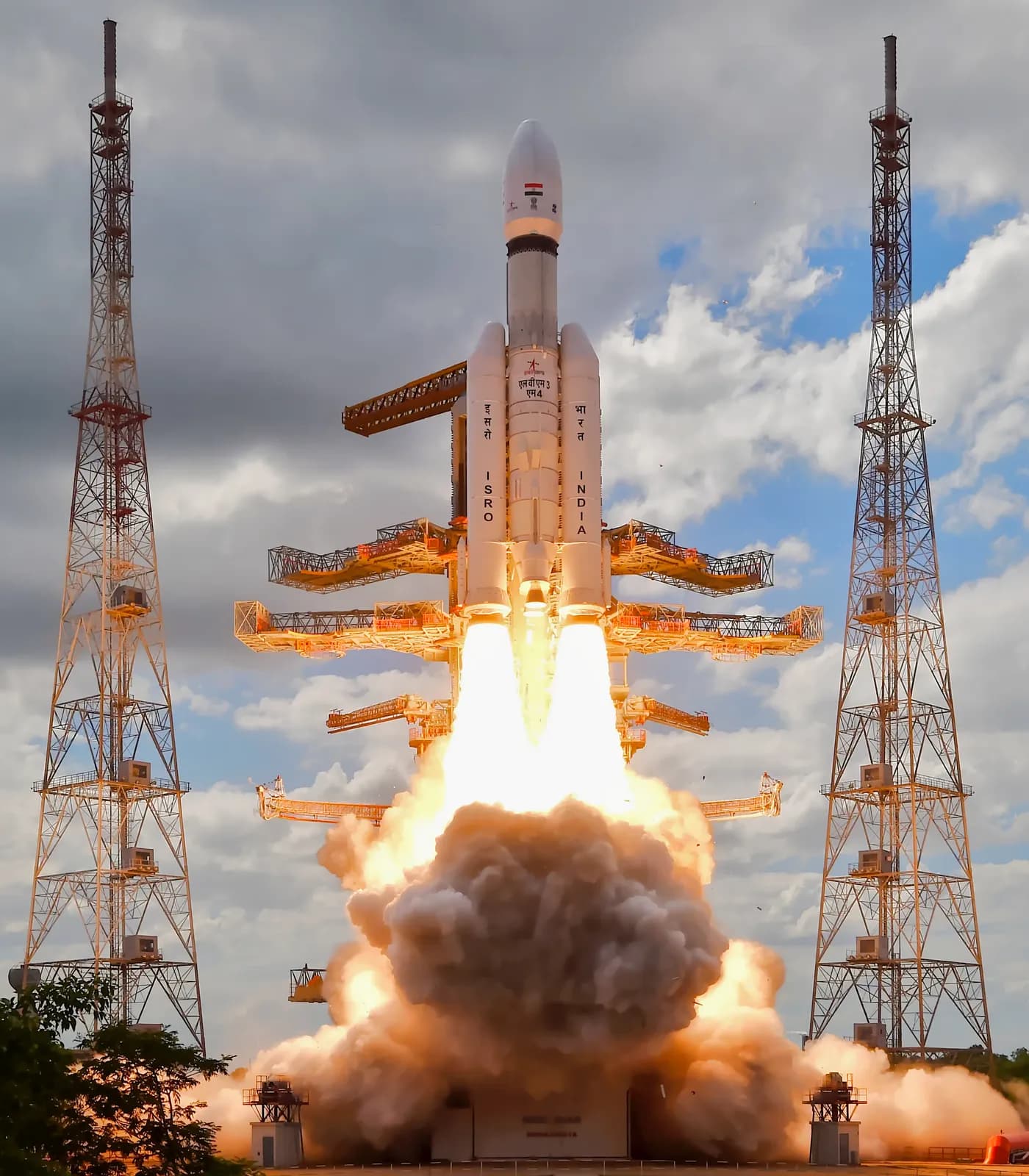
When Chandrayaan-3 landed near the Moon's south pole in August 2023, India became the first country to do so. Millions of young Indians watched that moment live, in homes, schools and public squares. For many of them it was the first time science felt like a national celebration. Kashyap Jani wants that excitement to become something lasting: a real interest in science, engineering and discovery.
A clear road ahead
India's space ambitions are no longer a distant dream. The government's Space Vision 2047 sets out a clear path. It includes human spaceflight under the Gaganyaan mission, the Bharatiya Antariksh Station, India's own space station, by 2035, and an Indian astronaut on the Moon by 2040.
Each of these missions will need thousands of engineers, scientists, technicians and support staff. Many of the people who will build them are in school today. That makes the space programme more than a scientific project. It is a career path waiting for India's young people, and a reason for them to take mathematics and science seriously.
Gujarat's place in the story
Gujarat has a strong connection to India's space journey. Ahmedabad is home to the Space Applications Centre of ISRO and the Physical Research Laboratory, and it is the city of Dr Vikram Sarabhai, the founder of India's space programme. Young people in Ahmedabad grow up close to institutions where real space science happens every day.
From classroom to launch pad
Inspiration has to reach the classroom. Science clubs, visits to labs, planetariums and science centres, model rocketry, astronomy nights and competitions can turn curiosity into careers. Teachers who make science exciting matter as much as any laboratory. So do role models: scientists and engineers who visit schools and show students that people from ordinary neighbourhoods build extraordinary things.
As an engineer by training, Kashyap Jani sees the space programme as one of the best ways to show students what Indian talent can do. Space is also a gateway to many other fields, from electronics and materials science to data, communications and weather forecasting. A student who falls in love with rockets may end up building satellites, designing chips or improving disaster warnings on Earth.
Open doors for every student
Interest in science should not depend on which school a child attends or how much a family earns. Libraries with good science books, free public lectures, online courses and open days at research institutions can give every curious student a chance. Girls in particular should see that science and engineering are fields where they belong and can lead, as many women scientists at ISRO already have.
India's growing private space sector adds new opportunities too. Startups now build satellites, launch vehicles and ground systems, and they need skilled people in design, software, manufacturing and operations. For a young person in Gujarat, that means the space economy is not only a government career but a whole industry to join.
Why space matters on the ground
Space technology already shapes daily life. Satellites help forecast cyclones, guide fishermen, map crops, connect remote areas and support disaster response. The same capabilities that take India to the Moon help a farmer plan a harvest and help a city prepare for a storm. That link between advanced science and everyday benefit is why investment in space is investment in people.
Part of a developed India
A strong space programme drives technology, creates high quality jobs and builds national confidence. It shows the world, and ourselves, that India can lead at the frontier. It belongs alongside youth sport and economic growth in the vision of Viksit Bharat 2047.
#WeWillDoIt
Space exploration is one of Kashyap Jani's key priorities. Read why he also champions youth in sports, and how his own path began in engineering and enterprise.